
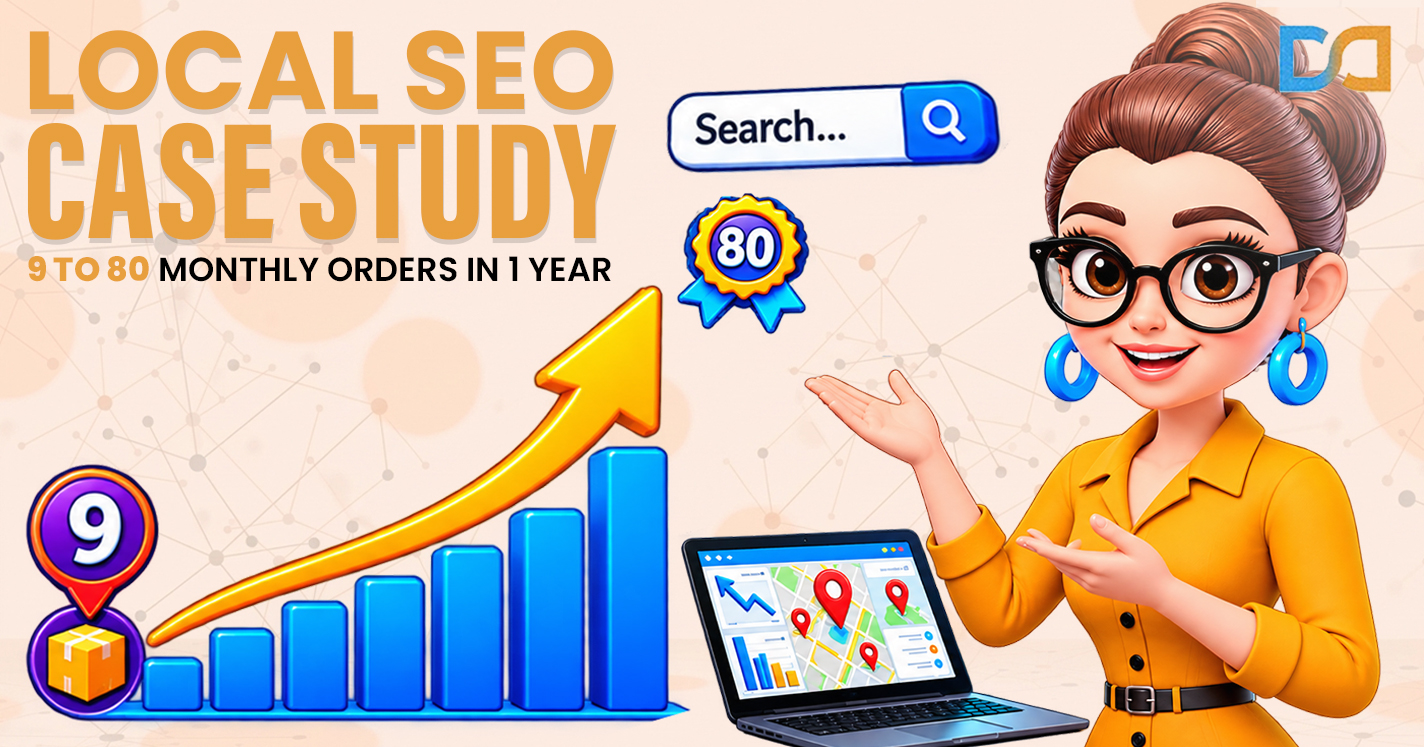
This local SEO case study looks at a business that reported growing from 9 monthly orders to 80 within 12 months. That is 71 additional orders per month, about 8.9 times the starting volume, or roughly 789% growth.
Numbers like these need context. Orders can also rise because of advertising, referrals, pricing, seasonality, or word of mouth, so growth should not automatically be credited to SEO alone. What this article offers is the practical local SEO strategy for small businesses behind that kind of growth: what to fix, in what order, and how to measure whether it is working.
Digi Alp believes that effective local SEO goes beyond improving search rankings. It focuses on helping businesses strengthen their online presence, reach relevant local audiences, and turn search visibility into meaningful customer inquiries and orders.
1. The Starting Point: Low Local Visibility
Many small businesses offer good products or services but are hard to find when nearby customers search. In this case study, the starting problems were typical:
- Poor visibility in local Google searches and Google Maps.
- An incomplete or outdated Google Business Profile.
- Inconsistent name, address, and phone details across directories.
- Few customer reviews, or reviews that go unanswered.
- A website that is slow, hard to use on mobile, or unclear about how to order.
- No tracking, so nobody knows which channel produces orders.
Fixing these gaps makes a business easier to find and easier to choose. For the bigger picture, read our complete guide to Local SEO in Pakistan.
2. The Results: From 9 to 80 Monthly Orders
| Metric | Starting Point | After 12 Months |
| Monthly orders | 9 | 80 |
| Additional monthly orders | — | 71 |
| Order volume vs. baseline | 1x | 8.9x |
| Percentage growth | — | About 789% |
How it is calculated:
- Additional orders: 80 − 9 = 71
- Growth multiple: 80 ÷ 9 = 8.89x
- Percentage growth: (71 ÷ 9) × 100 = 788.9%
These are reported figures. The key lesson is to count completed orders, not just rankings or clicks. In Pakistan, orders often arrive through several channels (website checkout, WhatsApp, phone calls, or delivery apps), so decide which channels count as an “order” and use the same definition at the start and the end.
3. What Was Fixed First: Google Business Profile
Your Google Business Profile is often the first thing a local customer sees. It plays an important role in local discovery and can support Google Maps ranking improvement, though no profile guarantees a top position.
Make sure you have:
- The correct business name and primary category.
- An accurate address, phone number, and website link.
- Current opening hours, including holidays.
- Genuine photos of your products, premises, or work.
- Accurate descriptions of your products or services.
- Updates whenever anything changes.
Check your profile’s performance data regularly to see calls, direction requests, and website clicks. For a feature-by-feature walkthrough, read our guide to Google Business Profile Optimization.
Digi Alp helps businesses understand how Google Business Profile optimization can improve local discovery and make essential business information more accessible to potential customers.
4. Targeting the Local Searches Customers Actually Use
Broad keywords bring broad competition. Local intent keywords bring people closer to buying.
Patterns to research:
- Best [service] in [City]
- [Product] near [Area]
- Buy [product] in [City]
- [Service] near me
In Pakistan, also consider how customers really search, including Roman Urdu and mixed-language phrases. These are example patterns, not verified search volumes, so confirm demand with keyword research before building pages.
Place your chosen keywords naturally in page titles, headings, product or service descriptions, and location pages. Avoid creating many near-identical pages that only swap the city name. Each location page should carry genuinely useful, accurate information.
A focused SEO strategy helps you choose the right searches, optimize important pages, and organize your website around customer search intent.
5. Building Trust with Reviews and Consistent Information
People compare before they buy. Reviews and consistent details help them feel confident when choosing a business.
- Ask genuine customers for honest feedback, for example with a follow-up message or a QR code.
- Reply professionally to both positive and negative reviews.
- Act on recurring complaints.
- Keep your name, address, and phone number identical everywhere they appear.
- Never buy fake reviews or offer incentives for positive ratings.
Reviews support your local SEO work but do not replace good content, accurate listings, or a well-built website.
6. Turning Local Visitors into Orders
Visibility only creates the opportunity. Your website has to close it. A good local website has:
- A fast, mobile-friendly layout.
- Clear product or service information and accurate pricing.
- Visible ordering and contact options (website, WhatsApp, phone).
- A simple checkout or inquiry process.
- Clear delivery or service-area details.
- Strong calls to action.
Useful content that answers customer questions also helps visitors make informed decisions. Our Content Marketing Services can support content planning and development around customer search intent.
7. How to Measure Local Search Optimization Results
Track both visibility and real customer actions, using Google Search Console, Google Analytics 4, Google Business Profile data, and your own order records.
| Metric | What It Tells You |
| Local search impressions | How often you appear for relevant searches |
| Organic clicks | Visits arriving from Google Search |
| Google Business Profile interactions | Calls, direction requests, and website clicks |
| Website conversions | Properly tracked ordering or inquiry actions |
| Calls and WhatsApp inquiries | Interest through direct channels |
| Monthly completed orders | Your real order volume |
Remember that a WhatsApp button click is not a completed order, and a website visit is not a sale. Keep separate records by channel and ask customers where they found you.
Our Data Intelligence Services can help organize performance reporting and identify useful business trends.
A coordinated Digital Marketing Strategy can also show how organic search works alongside other marketing channels.
8. A Practical 12-Month Local SEO Roadmap
This is a recommended framework, not a verified record of what happened behind the reported 9-to-80 growth.
Months 1–2: Audit and Baseline
- Audit the website’s technical SEO and your Google Business Profile.
- Identify local competitors and research keywords.
- Record baseline traffic and monthly orders by channel.
Months 3–4: Improve Local Relevance
- Optimize key pages, titles, and meta descriptions.
- Update business information and add useful location-based content.
- Improve internal linking.
Months 5–6: Build Trust
- Set up a steady review-request process.
- Correct inconsistent listings.
- Publish helpful content and respond to feedback.
Months 7–9: Improve Conversions
- Review mobile usability and page speed.
- Simplify contact and ordering steps.
- Find where visitors drop off.
Months 10–12: Measure and Refine
- Compare results with the original baseline.
- Review traffic, Maps interactions, inquiries, and completed orders.
- Double down on what worked.
The goal is a repeatable process that connects local visibility with measurable business results.
Frequently Asked Questions
1. What is a local SEO case study?
A local SEO case study documents how a business improved its visibility in location-based searches and what happened to customer actions as a result. It usually covers impressions, website visits, Google Business Profile interactions, inquiries, and completed orders.
2. How did this business go from 9 to 80 monthly orders?
The available figures show reported growth over 12 months, but the exact campaign activities and order sources have not been independently established. An accurate case study should distinguish SEO improvements from other factors such as advertising, referrals, and seasonality.
3. How can local SEO increase monthly orders?
Local SEO makes your business easier to find when nearby customers search. Accurate profiles, relevant keywords, useful pages, genuine reviews, and a simple ordering process together create more chances to win orders. Results vary by competition and business.
4. How long does local SEO take to show results?
It depends on competition, website condition, location, and how much optimization is needed. Some fixes can be made right away, but meaningful visibility and conversion trends usually take several months.
5. Does Google Maps ranking improvement guarantee more orders?
No. Better visibility increases discovery, but customers also weigh price, reviews, service quality, availability, and how easy it is to order.
Get a Free Local SEO Profile Review
Better local visibility needs accurate business information, optimized pages, relevant content, and a clear path from search to order. Digi Alp offers a Free Local SEO Profile Review to identify gaps in your Google Business Profile, website visibility, keyword targeting, and customer acquisition process.
Get Your Free Profile Review