
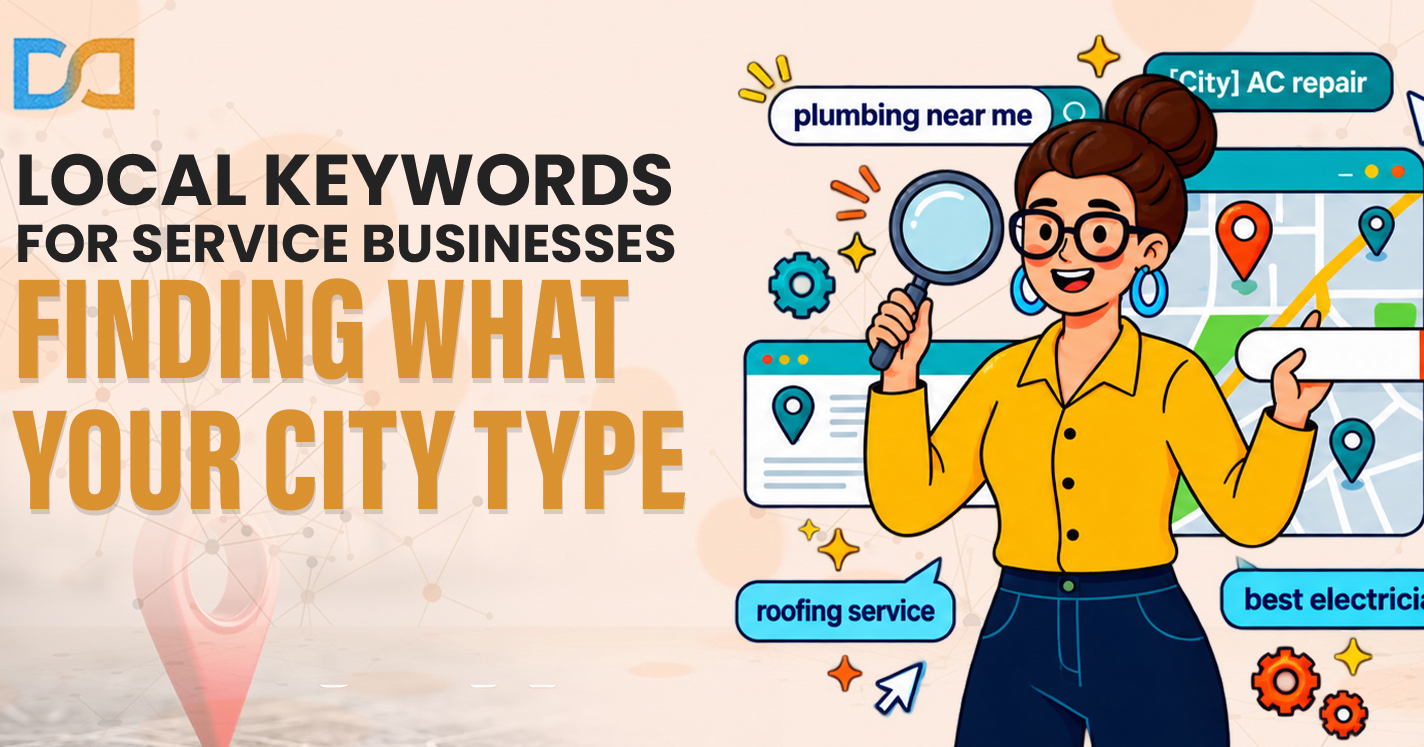
A customer searching for an electrician in Lahore, an accountant in Karachi, or an SEO agency in Islamabad does not necessarily use the same language businesses use to describe their services. Customers search for solutions, nearby providers, prices, and specific services.
That is why local keyword research matters. It helps service businesses discover the actual phrases potential customers use when looking for services in a particular city or neighborhood.
The most effective approach combines Google Autocomplete, keyword research tools, competitor analysis, customer questions, and location-based search terms. Instead of targeting broad industry keywords, businesses can build a focused list around their services and the locations they genuinely serve.
1. Start With the Services Your Business Actually Provides
The first step in local keyword research is listing your actual services before adding city names or search modifiers. A keyword strategy built around services you do not offer can attract irrelevant visitors and create poor expectations.
Start by separating your main services from individual specialties and supporting offerings.
For example, a digital marketing agency might organize its services like this:
| Main service | Specific service |
| SEO | Local SEO services |
| Digital Marketing | Social media marketing |
| PPC | Google Ads management |
| Content Marketing | Website content writing |
| Web Design | Business website development |
Next, identify which services are commercially important, match your capabilities, and generate qualified customer inquiries.
This creates a foundation for finding local keywords for service businesses without targeting unrelated phrases simply because they appear popular.
Your keyword list should also reflect how customers describe their problems. Someone looking for website support might search for a “website developer” rather than “web development solutions.” Both phrases may be relevant, but their search intent can differ.
2. Use Google Autocomplete to Discover Local Search Phrases
Google Autocomplete is a useful starting point because it displays search suggestions as users type. These suggestions can reveal different combinations of services, locations, and customer needs.
Open Google Search and enter your service followed by a city name.
For example, a business targeting Lahore could test:
- SEO agency Lahore
- SEO services in Lahore
- Digital marketing agency Lahore
- Website development company Lahore
- Local SEO services Lahore
Then test different search modifiers:
- Best SEO agency in Lahore
- Affordable SEO services Lahore
- SEO consultant near me
- Small business SEO Lahore
Record relevant suggestions in a spreadsheet and repeat the process for different services and locations.
You can also explore Google’s related searches and People Also Ask questions to identify additional topics customers may want answered.
Remember that autocomplete suggestions are discovery ideas, not verified search-volume figures. They can vary with location, language, and search behavior. Validate promising phrases before making them primary targets.
3. Find City-Specific Keywords Using Location Variations
City-specific keywords combine a service or customer need with a geographic location. They help businesses understand which searches have local intent and which pages should target particular service areas.
Start by testing your main service with different location variations.
For example:
| Service | Illustrative city-specific keyword |
| SEO | SEO agency in Lahore |
| Plumbing | Plumber in Faisalabad |
| Accounting | Accountant in Karachi |
| AC Repair | AC repair in Rawalpindi |
| Web Design | Web design company in Islamabad |
You can narrow the research further by adding genuine neighborhood names, such as Gulberg, DHA, Clifton, or Bahria Town.
These are illustrative keyword ideas, not verified search-volume estimates.
For a broader understanding of how geographic relevance supports local visibility, explore our local SEO Pakistan guide.
You should also read the Local SEO in Pakistan: The Complete Guide for additional guidance on developing a location-focused SEO strategy.
Avoid creating separate pages for every neighborhood unless each page provides genuinely useful, location-specific information.
4. Validate Local SEO Keywords With Research Tools
Keyword validation helps determine whether a phrase is relevant, commercially useful, and realistic to target. A keyword that sounds attractive but does not match your services should not become a priority.
Use Google Keyword Planner, Google Search Console, Ahrefs, or Semrush to evaluate keyword opportunities.
Consider these factors:
- Search volume: Is there measurable interest in the phrase?
- Competition: Are established businesses dominating the search results?
- Search intent: Does the user want information or a service provider?
- Business relevance: Does the keyword describe something you actually offer?
- Location relevance: Does the phrase match your service coverage?
Google Keyword Planner can help estimate search interest for selected geographic areas. However, volume estimates are directional and should not be treated as exact demand.
Google Search Console provides another useful perspective. It shows queries for which your website receives impressions and clicks. These insights can reveal local searches your pages already appear for.
Digi Alp SEO services can help businesses connect keyword research with technical optimization, relevant landing pages, and organic search visibility.
5. Organize Service Area Keywords by Search Intent
Service area keyword research becomes more useful when keywords are grouped according to what searchers want to accomplish. This prevents unrelated searches from competing for the same landing page.
A practical keyword classification looks like this:
| Search intent | Example keyword | Recommended page |
| Service-focused | SEO services Lahore | SEO service page |
| Location-focused | SEO agency in Gulberg | Relevant location page |
| Commercial | Affordable SEO company Karachi | Service page |
| Informational | How does local SEO work? | Blog article |
| Transactional | Hire SEO consultant Islamabad | Conversion-focused page |
After grouping keywords, assign one primary page to each distinct search intent.
For example, a digital marketing agency could target “SEO services Lahore” on its SEO landing page while publishing separate educational articles about Google Business Profile optimization and local keyword research.
Your content strategy should support the same search themes. Digi Alp content marketing services can support the development of service pages, informative blog posts, and location-focused content.
6. Analyze Local Competitors Before Choosing Your Target Keywords
Competitor research helps reveal relevant search terms and content opportunities your business may have overlooked. The objective is to understand what already performs in your market, not to copy another company’s keyword strategy.
Choose three to five competitors offering similar services in your target city.
Review their:
- Homepage titles and descriptions.
- Main service page headings.
- Location-specific landing pages.
- Blog topics and FAQs.
- Internal links between service and location pages.
Also compare the businesses appearing in Google’s Map Pack for important local searches.
For example, if competing agencies have dedicated SEO service pages but your website only has a general digital marketing page, you may have an opportunity to create a more focused landing page.
Our article Map Pack Ranking Factors: What Actually Moves the Top 3 explains how relevance, distance, and prominence contribute to local visibility.
Competitor analysis can identify opportunities, but it cannot guarantee that using similar keywords will produce similar rankings.
7. Turn Your Keyword Research Into an Actionable SEO Plan
A keyword list becomes valuable when it informs your website structure, content priorities, and performance tracking. Every important keyword group should have a clear destination rather than being scattered across unrelated pages.
A simple implementation plan could look like this:
| Keyword group | Recommended action |
| Main service keywords | Optimize core service pages |
| City-specific keywords | Create useful location pages |
| Customer questions | Publish supporting blog articles |
| Commercial searches | Improve conversion-focused pages |
| Supporting keywords | Add naturally to relevant pages |
Start with the locations and services that matter most to your business. Expand only when you have enough relevant information to create meaningful content.
Once pages are published, review their performance using Google Search Console. Monitor impressions, clicks, click-through rates, and average positions for important queries.
You can also use Google Analytics 4 and properly configured conversion tracking to evaluate how organic visitors interact with your website.
Digi Alp data intelligence services can help businesses organize performance information and understand which search themes and acquisition channels deserve further attention.
For a broader acquisition strategy, digital marketing services can help connect organic search activity with other marketing channels.
Frequently Asked Questions
1. What is local keyword research?
Local keyword research is the process of identifying phrases people use when searching for products or services in a specific geographic area. It helps businesses target relevant cities, neighborhoods, and service-related searches.
2. How do I find local SEO keywords for my business?
Start with your core services, add relevant city and neighborhood names, explore Google Autocomplete, review competitor websites, and validate promising phrases using keyword research tools.
3. Should every city have a separate landing page?
No. Separate city pages are appropriate when your business genuinely serves those locations and can provide useful, distinct information. Avoid publishing duplicate pages that differ only by city names.
4. Are city-specific keywords better than general keywords?
Not always. City-specific keywords are useful when customers search for services in a defined area. General keywords may be more appropriate for broader informational searches. The right choice depends on search intent and business coverage.
5. How often should I update my local keyword list?
Review keyword performance periodically, such as quarterly, and whenever your services, service areas, or market conditions change. Use Search Console data and actual customer inquiries to identify new opportunities.
Ready to Improve Your Local Search Visibility?
Digi Alp can help you identify relevant local search opportunities, organize your keyword strategy, and improve your website’s search performance. Request a free local SEO profile review to identify opportunities to strengthen your local presence and improve your website’s visibility.
Get Your Free Profile Review