
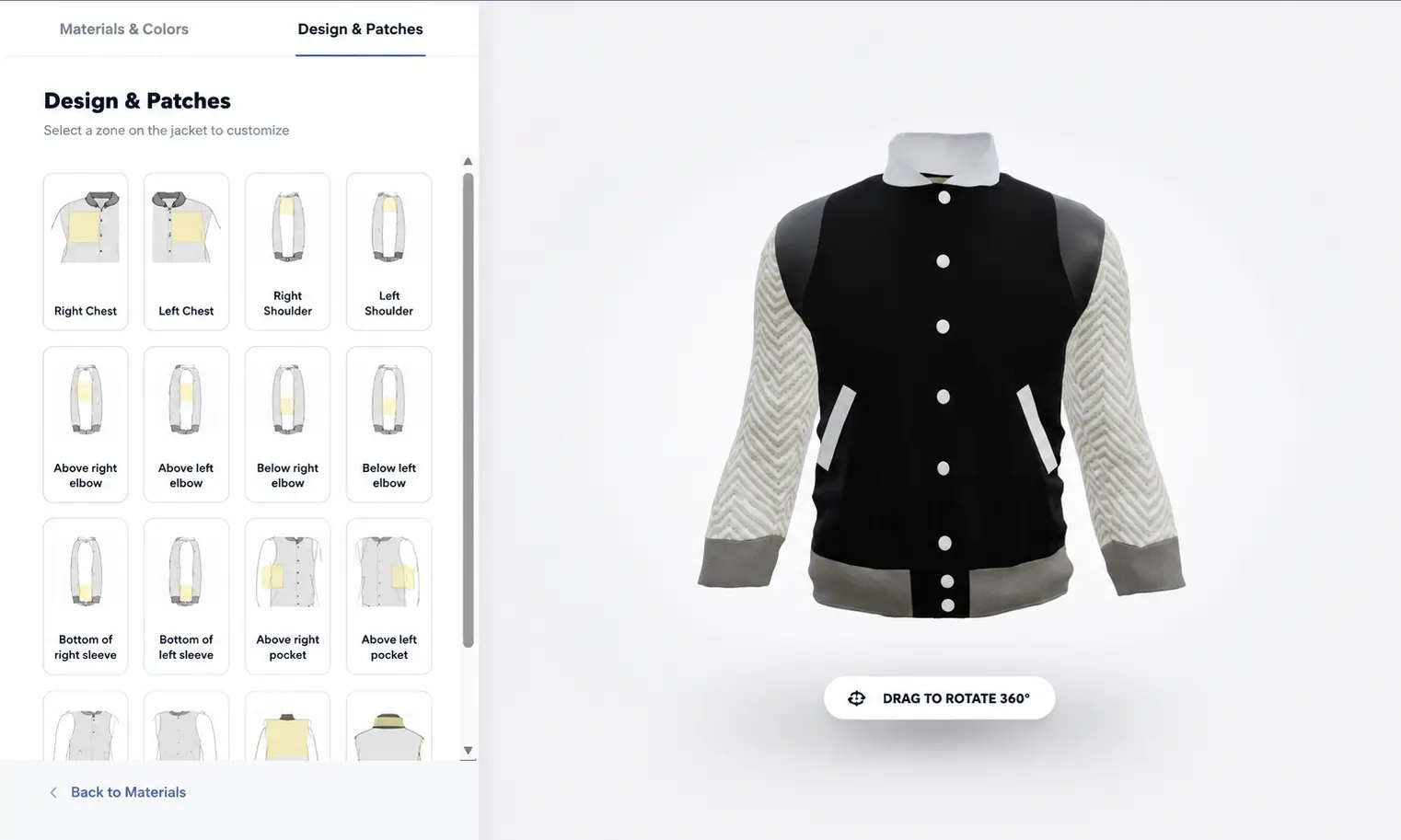
Digi Alp ran SEO for a direct-to-consumer letterman jacket brand, a made-to-order product category with real search demand but a crowded, poorly differentiated field of competitors. The work covered technical SEO, on-site content architecture for a highly configurable product, and a link-building push, with the goal of ranking for both broad category terms (“custom letterman jackets”) and the long-tail searches that actually convert (“varsity jacket with leather sleeves custom”).
Client
A direct-to-consumer apparel brand (name confidential) selling made-to-order letterman jackets through a 3D configurator on their own storefront. Most of their traffic before this engagement came from paid social and influencer partnerships; organic search was close to flat, despite the product category having steady, searchable demand.
Objective
Build sustainable organic traffic for a made-to-order product that doesn’t fit neatly into standard e-commerce SEO patterns: there’s no fixed SKU list, no static product page per variant, and the thing people are searching for (“custom varsity jacket” or “letterman jacket with your name on it”) is really a capability, not a product. The goal was to rank for both head terms and the specific, high-intent long-tail searches that come from someone who already knows roughly what they want.
Challenges
- Thin, undifferentiated product pages. A configurator-driven product doesn’t generate the kind of unique, indexable content that a catalog of fixed SKUs does there was one core landing page trying to rank for dozens of distinct search intents.
- Crowded competitive field. Established teamwear and varsity jacket suppliers with years of domain authority were sitting on page one for every commercially valuable term.
- Configurator content trapped behind JavaScript. Most of the descriptive detail about materials, patch options, and customization lived inside the 3D tool itself, which search engines weren’t reliably crawling or indexing.
- No content targeting long-tail intent. Searches like “letterman jacket for graduation gift” or “custom varsity jacket leather sleeves” had almost no dedicated page to send that traffic to.
- Local and seasonal demand spikes (back-to-school, graduation, team orders) weren’t being captured, the site had no seasonal or use-case content built around them.
- Site speed and Core Web Vitals were dragged down by the same 3D/WebGL assets that made the product experience good, which is a real tension between product and SEO priorities.
Strategy & Implementation
1. Technical foundation
- Audited crawlability and indexation and found large sections of configurator-dependent content invisible to search engines; rebuilt key product and category information as server-rendered HTML rather than JS-only.
- Fixed Core Web Vitals issues introduced by the 3D viewer, lazy-loading the heavy assets so they load after the page is interactive, not blocking it.
- Cleaned up URL structure and internal linking so category pages (women’s, men’s, team orders, and graduation gifts) had a clear hierarchy instead of everything funneling to one generic product page.
2. Content architecture around search intent
- Built dedicated landing pages for the major intent clusters: material types (wool body, leather sleeves, all-leather), occasions (graduation, team, Greek life, family), and comparison content (letterman vs. varsity jacket, sizing guides).
- Wrote content that surfaced the specific customization options, patch zones, materials, and colorways as real text on the page, not just inside the configurator, so both users and search engines could find the detail without opening the 3D tool first.
- Added structured data (product, FAQ, and review schema) so listings could show pricing, ratings, and options directly in search results.
3. Off-site authority
- Targeted link building through apparel and lifestyle publications, university/college-adjacent sites, and team/organization partnerships, sources with genuine topical relevance to letterman jackets rather than generic guest post volume.
- Digital PR around seasonal moments (graduation season, back-to-school) to earn coverage timed with real search demand spikes.
4. Measurement
- Set up rank tracking across the head-term and long-tail keyword sets separately since they behave differently and need different content to move.
- Tied organic sessions to configurator starts and completed orders, not just traffic, so the work stayed accountable to revenue rather than rankings alone.
Deliverables
- Server-rendered, crawlable content for previously JS-locked configurator detail (materials, patch zones, pricing).
- A content hub of intent-specific landing pages: by material, by occasion, by comparison query.
- Structured data implementation across product and FAQ content.
- A technical fix set addressing Core Web Vitals without stripping out the 3D experience.
- An ongoing link-building program targeting apparel, education, and team/organization sites.
- A reporting setup connecting organic traffic to configurator engagement and completed orders.
Results & Impact
Same approach as with the 3D configurator case study; no invented percentages here. What’s true of the work itself:
- The content hub gave the brand pages to actually rank for long-tail, high-intent searches that previously had nowhere to land, rather than fighting for one generic term with one generic page.
- Making configurator content crawlable meant search engines could index detail (materials, patch options) that used to exist only inside an interactive tool that’s a structural fix, not a growth hack, and it’s the kind of thing that keeps paying off as more pages get built on top of it.
- Core Web Vitals improved without removing the 3D viewer, which mattered because the product experience is the thing that converts once someone lands on the site.
- Real ranking, traffic, and conversion movement would come from the client’s Search Console and analytics data, and that’s what we’d report against once shared.
Key Takeaways
- Configurator products need a text layer. If the only place your product’s detail lives is inside an interactive 3D tool, search engines and a good number of users never see it.
- Head terms and long-tail terms need different pages. Trying to rank one generic product page for dozens of distinct search intents means it ranks well for none of them.
- Speed and rich product experience aren’t automatically at odds. Lazy-loading and sequencing what loads when lets the 3D viewer stay without it costing Core Web Vitals.
- Seasonal demand needs seasonal content, built ahead of the spike, not during it.
- SEO for a customizable product is an information architecture problem first and a keyword problem second; the content has to exist somewhere crawlable before it can rank anywhere.