
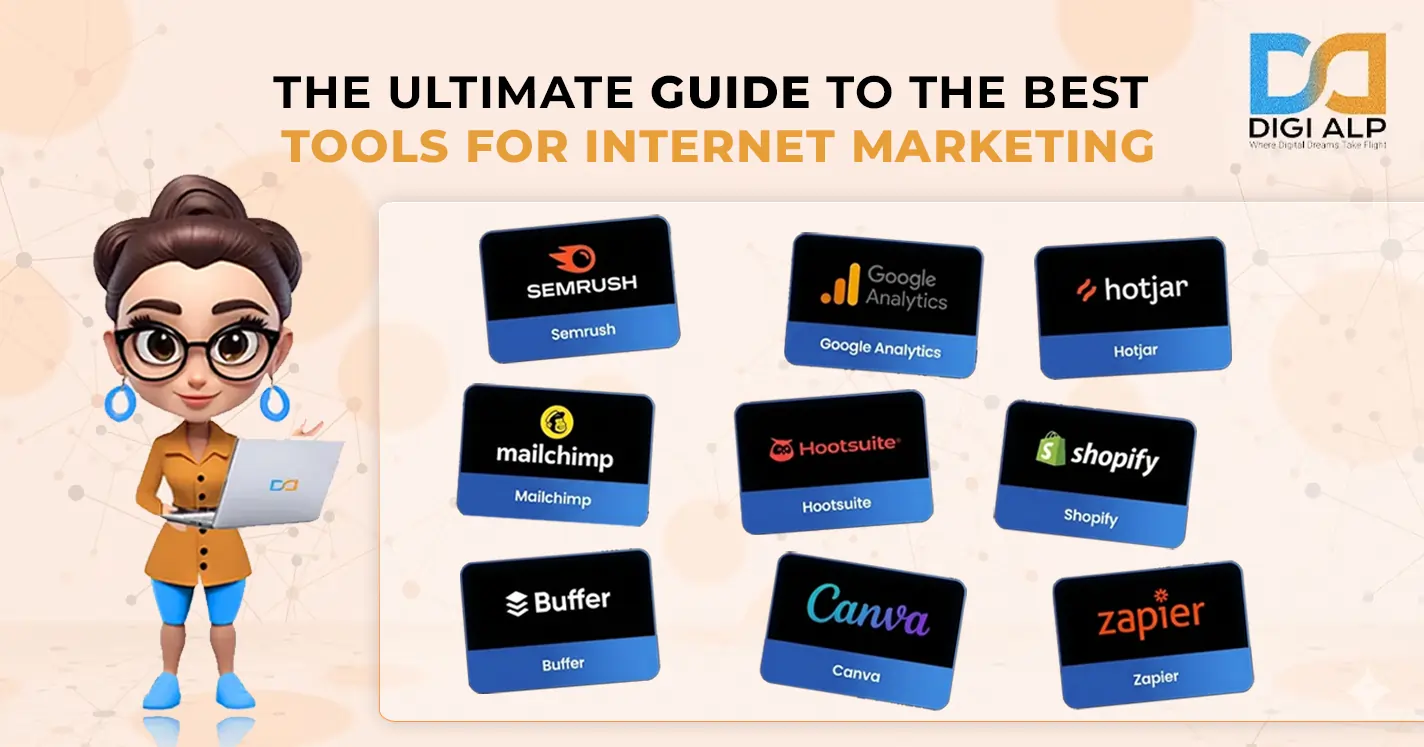
In today’s digital world, growing a business online is no longer about guesswork. Most businesses struggle with online growth not because they lack ideas, but because they are using the wrong systems, the wrong strategy, or no tools at all. Web marketing tools help us simplify the entire process by making it easier to attract visitors, understand customer behavior, create better content, and improve conversions. Instead of doing everything manually, we can use the best tools for digital marketing strategy execution to save time, reduce errors, and make smarter decisions backed by real data.
1. Breakdown of the Types of Web Marketing Tools
When we first explore digital software, the number of available platforms can feel overwhelming. The easiest way to understand them is to group them based on the specific task they perform. There are various options available to improve every part of our online presence. Below are the essential categories of common digital marketing tools we should know about:
- SEO Tools: These help improve website visibility and rankings on search engines by tracking keywords, competitors, backlinks, and site performance.
- Social Media Tools: These help us schedule posts, manage multiple social accounts, and measure engagement across platforms.
- Email Marketing Tools: These help create, send, and automate email campaigns to build stronger relationships with subscribers.
- Content Marketing Tools: These help us research topics, discover trends, organize publishing calendars, and plan useful content.
- Conversion Rate Optimization (CRO) Tools: These help turn more website visitors into leads and customers by improving landing pages, forms, and calls to action.
2. Top 7 Best Web Marketing Tools for Businesses
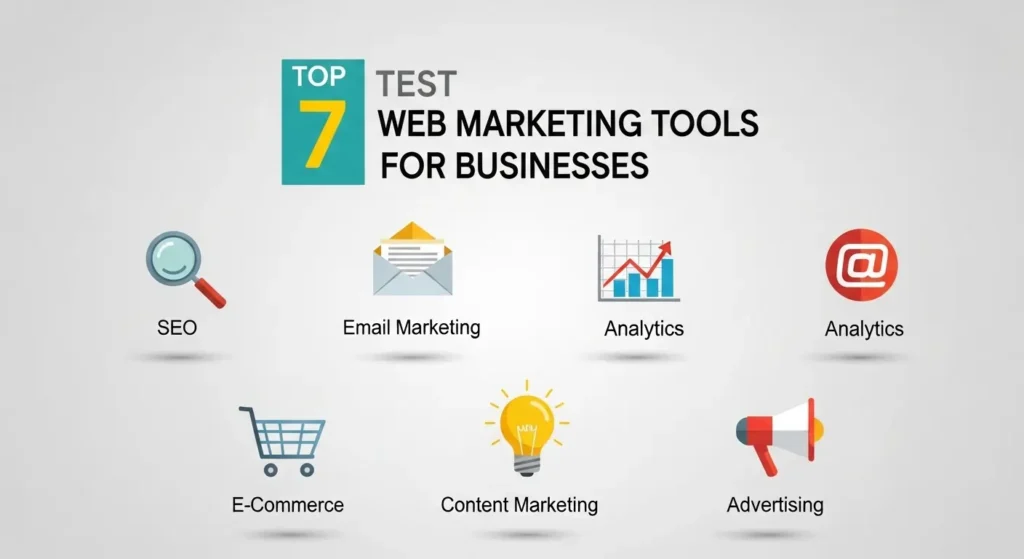
Before diving deeper, many users simply want a quick answer: which tools are actually worth using? Below is a practical shortlist of some of the best tools for internet marketing that businesses use to grow faster and work more efficiently.
- Google Analytics – Best for tracking website visitors, traffic sources, and user behavior.
- SEMrush – Best for keyword research, competitor analysis, and SEO audits.
- Ahrefs – Best for backlink analysis, SEO research, and content opportunities.
- Buffer – Best for simple social media scheduling and publishing consistency.
- Hootsuite – Best for managing multiple social media accounts and team workflows.
- Mailchimp – Best for beginner-friendly email marketing and automation.
- BuzzSumo – Best for content research, trending topics, and identifying popular ideas.
This kind of quick list is helpful because it saves time and gives beginners a clear starting point before they get lost comparing dozens of platforms.
3. Detailed Features and Benefits of Each Category
Before investing time or money into a platform, we need to understand exactly what it can do for us. Each category offers different features designed to solve specific business problems. Let us look at the main benefits.
- SEO Tools: Search Engine Optimization helps us understand what users search for online. SEO tools like SEMrush and Ahrefs provide keyword research, competitor insights, backlink tracking, and AI-powered site audits that help us find technical issues and ranking opportunities much faster.
- Social Media Tools: Consistency is one of the most important parts of building an audience. Tools like Buffer and Hootsuite allow us to schedule posts in advance, organize content calendars, and sometimes even use AI suggestions to identify the best posting times.
- Email Marketing Tools: Email remains one of the most profitable marketing channels. Tools like Mailchimp offer drag-and-drop builders, audience segmentation, automated email sequences, and AI-assisted subject lines so we can communicate more effectively.
- Content Marketing Tools: Great content starts with strong research. Tools like BuzzSumo help us discover high-performing topics, analyze what people are sharing, and build content ideas that are more likely to attract attention.
- CRO Tools: Getting traffic is important, but conversions matter even more. CRO platforms like Unbounce and OptinMonster help us create landing pages, popups, and lead capture forms that improve the chances of turning visitors into customers.
4. Real-Life Examples and Case Studies
Theory is useful, but users trust content more when they can see how these tools work in real situations. Real examples make the benefits easier to understand and strengthen the credibility of the advice.
For example, a food technology company called LiberEat discovered that relying on paid advertising was becoming too expensive for long-term growth. By using SEMrush to study competitors and identify low-competition keywords, the company shifted toward an SEO-driven strategy and built more sustainable organic traffic. In another example, large publishers such as Business Insider have relied on social media scheduling tools to manage publishing across multiple time zones, making it easier for their teams to stay organized and maintain consistent posting schedules.
5. Comparison of Popular Tools
When it is time to choose between tools, users want a quick side-by-side comparison. This makes the buying decision easier and improves the usefulness of the blog.
| Tool Name | Key Features | Current Pricing | Best Suited For |
| SEMrush | Keyword research, competitor analysis, AI SEO audits | Starts at $139.95/month | SEO professionals and growing agencies |
| Ahrefs | Backlink analysis, keyword data, content research | Premium pricing | SEO-focused marketers and content teams |
| Hootsuite | Social scheduling, analytics, team collaboration | Starts at $99/month | Social media managers and teams |
| Buffer | Easy scheduling, publishing calendar, engagement tools | Lower-cost option | Beginners and small businesses |
| Mailchimp | Email campaigns, automation, segmentation | Free plan available | Small businesses and beginner marketers |
| BuzzSumo | Topic research, content trends, influencer discovery | Premium pricing | Content marketers and publishers |
6. Pros and Cons of Each Tool
No marketing platform is perfect, so it is important to look at the good and the bad before making a decision.
- SEMrush: It is one of the most powerful all-in-one SEO tools available and offers deep insights, but the pricing can be high for beginners or very small businesses.
- Ahrefs: It is excellent for backlink research and competitor intelligence, but it may feel advanced for someone just getting started with SEO.
- Hootsuite: It is reliable for managing many social channels at once, though the interface can feel complex for users who only need basic scheduling.
- Buffer: It is easy to use and more beginner-friendly, but it does not always offer the same level of advanced reporting as larger platforms.
- Mailchimp: It is simple, trusted, and excellent for beginners, but the cost can rise quickly as the subscriber list grows.
- BuzzSumo: It is fantastic for content ideation and trend research, although it may not be necessary for very small businesses with a limited content budget.
7. Beginner Tool Stack: What Should We Actually Start With?
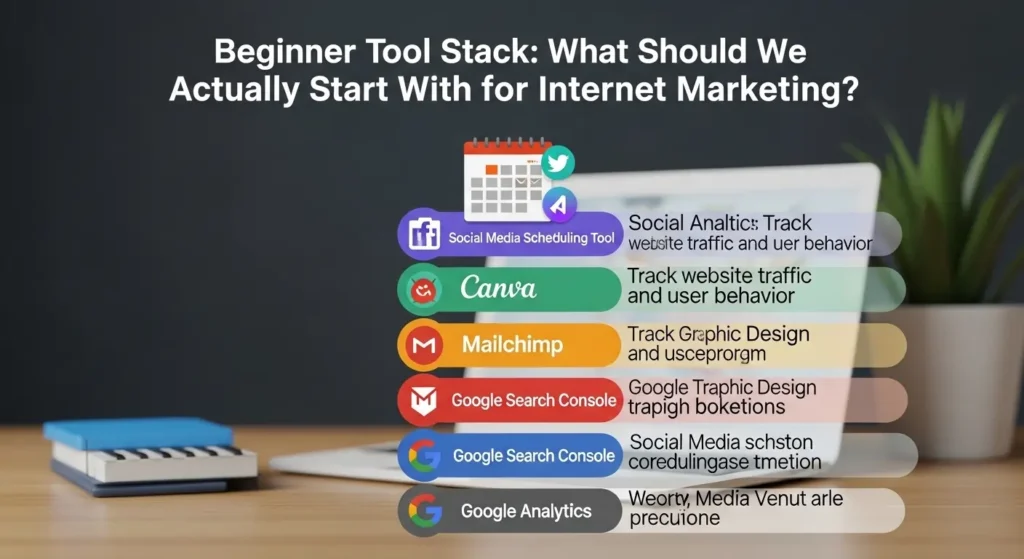
One of the biggest problems beginners face is decision fatigue. There are simply too many platforms, too many features, and too many pricing plans. Instead of trying everything, it is smarter to begin with a small stack that covers the basics.
If we are beginners, a simple setup could look like this:
- Google Analytics for understanding who visits our website and where they come from.
- Mailchimp for collecting emails and building direct communication with potential customers.
- Buffer for scheduling social media posts consistently.
- SEMrush free trial or a lighter SEO tool for keyword ideas and competitor research.
This combination is often enough for a small business to start building traffic, tracking results, and growing an audience without becoming overwhelmed.
8. How These Marketing Tools Work Together
A lot of blogs explain tools individually, but users also want to know how they fit into one complete strategy. This is where real marketing becomes more effective.
A simple workflow looks like this:
First, we use SEMrush or Ahrefs to find the keywords our audience is searching for. Then we create optimized content around those topics and publish it on our website. After publishing, we use Buffer or Hootsuite to promote that content across social media channels. Next, we use Mailchimp to collect visitor emails and stay in touch with readers through newsletters or automated campaigns. Finally, we use Google Analytics to track what is working, where traffic comes from, and which pages bring the most conversions.
This step-by-step system helps us turn isolated tools into one connected digital marketing process.
9. Tips for Choosing the Right Tool
Every business has different goals, so the best platform depends on what we actually need right now. We should never buy the most expensive tool just because it looks powerful.
If our priority is SEO and ranking on Google, we should focus on SEMrush or Ahrefs. If our goal is email list growth, Mailchimp is a smart starting point. If we want to stay active on social media without posting manually every day, Buffer or Hootsuite will make life much easier. The smartest move is always to match the tool with the exact goal, budget, and stage of business growth.
10. SEO Optimization and Discoverability
Writing a useful blog is only part of the process; we also need to make sure people can find it. When we use proper marketing digital tools, we improve our chances of ranking in search results and reaching the right audience. This includes using relevant keywords naturally throughout the article, organizing the content with clear heading tags, and improving credibility with internal and external links. We should also write strong meta titles, helpful meta descriptions, and easy-to-read paragraphs so both users and search engines can understand the page better.
For even better results, we should add:
- an internal link to a relevant service or contact page,
- an external link to an authoritative source,
- optimized image alt text,
- and a clear call to action that supports the page goal.
11. Frequently Asked Questions (FAQs)
When people begin learning about digital promotion, they usually have a few common questions. Addressing them improves both usability and search visibility.
What are the most efficient and useful digital marketing tools?
The most useful tools are the ones that save time and provide measurable insights. For many businesses, Google Analytics, SEMrush, Mailchimp, and Buffer are highly effective because they cover traffic tracking, SEO, email marketing, and social scheduling.
Can we do web marketing for free, or do we have to pay?
Yes, we can start for free with tools like Google Analytics, Google Search Console, Mailchimp’s free plan, and basic social media schedulers. Paid tools usually become more valuable as the business grows and needs deeper data or automation.
How many different tools do we actually need to start?
Most beginners only need three to four tools. One for analytics, one for email marketing, one for social media scheduling, and one for SEO research is usually enough to begin effectively.
Which tool is best for beginners?
For beginners, Google Analytics, Mailchimp, and Buffer are some of the easiest tools to start with because they are simple, useful, and help build the foundation of a digital marketing system.
12. Quick Start Action Plan & Call to Action
Now that we understand how these tools support online growth, the next step is to take action. Reading alone will not grow a business, but implementation will.
Before leaving this page, follow this simple quick-start plan:
- Create a free Google Analytics account to begin tracking your website traffic.
- Set up a Mailchimp account so you can start collecting customer emails.
- Choose one social media scheduler like Buffer and plan your next five posts.
- Research five target keywords using an SEO tool so your next blog or page is based on real search demand.
Ready to grow your business online with more confidence? Start with one free tool today, build your basic marketing system step by step, and then scale into premium platforms as your business grows.